
Building a Reusable Logistics Box Fleet for European Material Flow
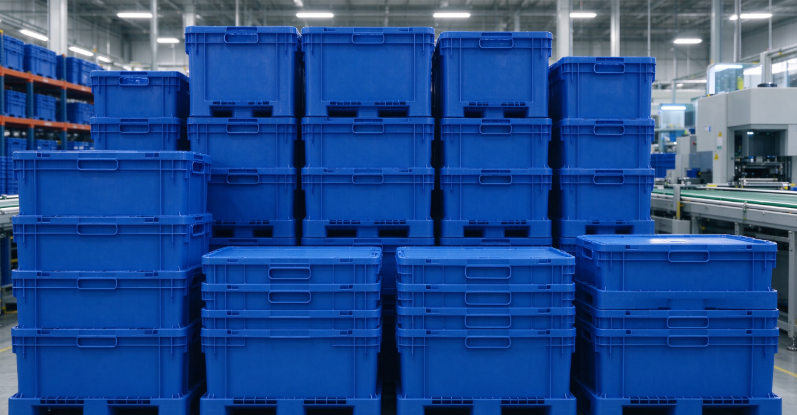
<p><span style="color: rgb(45, 52, 60); font-size: 9.5pt;">Reusable logistics boxes move parts through production, storage, distribution, and return transport. Standardizing a fleet can simplify handling, but only if boxes fit the same equipment, remain identifiable, and are inspected before reuse. Youngest Plastic Box lists EU standard boxes alongside dust-proof, HP, folding, turnover, and crate families, plus logistics pallets, bins, lids, and dividers [1]. This guide focuses on creating a dependable fleet specification and control process without assuming unpublished capacities or declaring a box compliant to a standard from its product name alone.</span></p><h1><span style="color: rgb(24, 54, 82); font-size: 14pt;"><strong>Map the forward and return loop</strong></span></h1><p><span style="color: rgb(45, 52, 60); font-size: 9.5pt;">Draw the route from the supplier or production cell to receiving, storage, picking, line-side delivery, and empty-container return. For every handoff, identify the equipment, unit load, and container orientation. Determine whether boxes are stacked, conveyed, lifted by hand, stored on racks, or palletized. A good fleet standard fits all interfaces, rather than optimizing one station and creating a bottleneck somewhere else.</span></p><p><span style="color: rgb(45, 52, 60); font-size: 9.5pt;">Estimate circulation time, containers in transit, cleaning or inspection time, and demand peaks. The number of boxes required depends on actual cycle time and buffer policy, not a generic number of “turns.” Consider losses, damaged units, seasonal inventory, and whether containers are shared among sites. A pilot loop can reveal how long empty boxes take to return and whether folding or nesting changes the transport economics. Do not claim a payback without measuring purchase, handling, freight, loss, and replacement costs.</span></p><h1><span style="color: rgb(24, 54, 82); font-size: 14pt;"><strong>Standardize model identity and compatibility</strong></span></h1><p><span style="color: rgb(45, 52, 60); font-size: 9.5pt;">Create a controlled container specification with model number, outside and inside dimensions, lid or divider interfaces, color, label location, barcode or RFID position, and approved material. Youngest’s industrial logistics category includes several EU model codes, but a code alone does not identify every dimension or load value on the catalog page [1]. Ask for drawings and revision control and maintain a sample as the approved reference. When mixing supplier brands, test stacking, nesting, conveyor transfer, and pallet layout before declaring them interchangeable.</span></p><p><span style="color: rgb(45, 52, 60); font-size: 9.5pt;">The EPAL Euro pallet’s footprint is 800 × 1,200 mm [2]. Use that published dimension as one logistics interface where applicable, then calculate the box pattern from the selected box’s true external dimensions and required clearance. Consider handling equipment tolerances and overhang limits. A nominal footprint that works on a pallet may still fail in a rack, conveyor, or automated storage system. Keep separate specifications for different systems where one container cannot safely serve all of them.</span></p><h1><span style="color: rgb(24, 54, 82); font-size: 14pt;"><strong>Label and identify the fleet through its life</strong></span></h1><p><span style="color: rgb(45, 52, 60); font-size: 9.5pt;">Labels should remain readable through expected handling and cleaning. Define label dimensions, placement, orientation, barcode symbology, human-readable fields, lot or owner code, and whether a permanent molded-in ID is needed. Make sure the label does not interfere with stacking, lid fit, sensors, or automated scanning. If boxes circulate between companies, identify ownership and contact information while avoiding unnecessary personal data.</span></p><p><span style="color: rgb(45, 52, 60); font-size: 9.5pt;">For serialized or pooled assets, maintain a record of model, revision, purchase date, location, inspection status, and repair history. A code should distinguish a standard box from an ESD version or a modified custom model. If changes are made to material, color, dimensions, inserts, or resistance properties, the old label should not continue to imply that the unit meets the previous specification. Quarantine units with missing or unreadable identification until they are checked.</span></p><h1><span style="color: rgb(24, 54, 82); font-size: 14pt;"><strong>Inspect, clean, repair, and retire consistently</strong></span></h1><p><span style="color: rgb(45, 52, 60); font-size: 9.5pt;">Create an incoming and return inspection checklist: cracks, deformed rims, broken hinges, damaged latches, sharp edges, contamination, missing labels, and unstable bases. Set repair criteria and retirement triggers based on the function and hazard assessment. A cosmetic scuff may be acceptable; a cracked stacking corner or distorted base can create a safety or product-damage risk. Train staff to segregate unsafe containers rather than returning them to circulation.</span></p><p><span style="color: rgb(45, 52, 60); font-size: 9.5pt;">Specify cleaning agents, water temperature, drying, and storage if the boxes require washing. Verify compatibility with the box material and any ESD properties. Do not assume repeated cleaning leaves an ESD configuration unchanged; define a test frequency and method with the supplier and ESD program owner. Youngest lists optional anti-static and conductive ranges for black configurations, but those values should be confirmed on the actual configuration and supported by test evidence [1].</span></p><h1><span style="color: rgb(24, 54, 82); font-size: 14pt;"><strong>Measure fleet performance and manage changes</strong></span></h1><p><span style="color: rgb(45, 52, 60); font-size: 9.5pt;">Track the operational measures that matter: box loss, damage, cleaning time, turn time, handling complaints, product damage, and scan failures. Record the denominator and observation period before comparing sites. A simple 30-day pilot can compare two container options in the same route if volumes and processes are sufficiently similar; it is a trial design, not a universal savings claim. Use the results to adjust quantity, layout, cleaning frequency, and replacement policy.</span></p><p><span style="color: rgb(45, 52, 60); font-size: 9.5pt;">Establish a change process for supplier, model, material, dimensions, inserts, label position, and special properties. Before approving a revision, check fit at every interface and update the master data, work instructions, and label. Re-evaluate the pallet pattern and automated handling if dimensions change. Maintain a small approved sample set at receiving and at the primary production site. Notify downstream users when a new revision enters the fleet so similar-looking units are not mixed accidentally.</span></p><h1><span style="color: rgb(24, 54, 82); font-size: 14pt;"><strong>Reusable-fleet planning data</strong></span></h1><p><span style="color: rgb(45, 52, 60); font-size: 9.5pt;">Company catalog figures are product-range facts only. EPAL pallet dimensions and EU language count are independent published references that should not be misapplied as box specifications.</span></p><table style="min-width: 75px;"><colgroup><col style="min-width: 25px;"><col style="min-width: 25px;"><col style="min-width: 25px;"></colgroup><tbody><tr><td colspan="1" rowspan="1"><p><span style="color: rgb(255, 255, 255); font-size: 8pt;"><strong>Planning data</strong></span></p></td><td colspan="1" rowspan="1"><p><span style="color: rgb(255, 255, 255); font-size: 8pt;"><strong>Published value</strong></span></p></td><td colspan="1" rowspan="1"><p><span style="color: rgb(255, 255, 255); font-size: 8pt;"><strong>Use in fleet design</strong></span></p></td></tr><tr><td colspan="1" rowspan="1"><p><span style="color: rgb(45, 52, 60); font-size: 8pt;">Youngest product categories</span></p></td><td colspan="1" rowspan="1"><p><span style="color: rgb(45, 52, 60); font-size: 8pt;">6 categories: logistics boxes, pallets, parts bins, lids/dividers, home storage, custom solutions</span></p></td><td colspan="1" rowspan="1"><p><span style="color: rgb(45, 52, 60); font-size: 8pt;">Identify compatible container and accessory families.</span></p></td></tr><tr><td colspan="1" rowspan="1"><p><span style="color: rgb(45, 52, 60); font-size: 8pt;">EU box model names</span></p></td><td colspan="1" rowspan="1"><p><span style="color: rgb(45, 52, 60); font-size: 8pt;">10 listed EU models</span></p></td><td colspan="1" rowspan="1"><p><span style="color: rgb(45, 52, 60); font-size: 8pt;">Standardize one approved SKU and revision per system.</span></p></td></tr><tr><td colspan="1" rowspan="1"><p><span style="color: rgb(45, 52, 60); font-size: 8pt;">EPAL Euro pallet footprint</span></p></td><td colspan="1" rowspan="1"><p><span style="color: rgb(45, 52, 60); font-size: 8pt;">800 × 1,200 mm</span></p></td><td colspan="1" rowspan="1"><p><span style="color: rgb(45, 52, 60); font-size: 8pt;">Reference for palletization calculations; verify box arrangement.</span></p></td></tr><tr><td colspan="1" rowspan="1"><p><span style="color: rgb(45, 52, 60); font-size: 8pt;">Supplier ESD options</span></p></td><td colspan="1" rowspan="1"><p><span style="color: rgb(45, 52, 60); font-size: 8pt;">Anti-static 10⁶–10⁹ Ω; conductive 10⁴–10⁶ Ω</span></p></td><td colspan="1" rowspan="1"><p><span style="color: rgb(45, 52, 60); font-size: 8pt;">Verify exact build and periodic test requirements.</span></p></td></tr><tr><td colspan="1" rowspan="1"><p><span style="color: rgb(45, 52, 60); font-size: 8pt;">Fleet process stages</span></p></td><td colspan="1" rowspan="1"><p><span style="color: rgb(45, 52, 60); font-size: 8pt;">5: issue, use, return, inspect/clean, reissue</span></p></td><td colspan="1" rowspan="1"><p><span style="color: rgb(45, 52, 60); font-size: 8pt;">Assign ownership and a record at every stage.</span></p></td></tr></tbody></table><h1><span style="color: rgb(24, 54, 82); font-size: 14pt;"><strong>Frequently Asked Questions</strong></span></h1><p><span style="color: rgb(24, 54, 82); font-size: 9.5pt;"><strong>How many boxes should a fleet include?</strong></span></p><p><span style="color: rgb(45, 52, 60); font-size: 9.5pt;">Calculate from demand, route cycle time, in-transit quantity, buffer policy, cleaning, loss and breakage. Measure the actual loop.</span></p><p><span style="color: rgb(24, 54, 82); font-size: 9.5pt;"><strong>Can visually similar boxes be mixed?</strong></span></p><p><span style="color: rgb(45, 52, 60); font-size: 9.5pt;">Only after verifying dimensions, stacking features, load data and compatibility across the real equipment interfaces.</span></p><p><span style="color: rgb(24, 54, 82); font-size: 9.5pt;"><strong>Does an ESD label guarantee ongoing performance?</strong></span></p><p><span style="color: rgb(45, 52, 60); font-size: 9.5pt;">No. Specify the tested model and method, then define verification after use and cleaning with the ESD program owner.</span></p><h1><span style="color: rgb(24, 54, 82); font-size: 14pt;"><strong>Conclusion</strong></span></h1><p><span style="color: rgb(45, 52, 60); font-size: 9.5pt;">A reusable box fleet needs a verified model specification, compatible handling interfaces, durable identification, return logistics, inspection, and controlled changes. Youngest’s catalog offers multiple box and accessory families, but the buyer must confirm actual drawings and ratings for the chosen model. Test the complete route and use operating data to set fleet quantities and maintenance rules.</span></p><h1></h1><p></p>