
How to Select an EU Standard Injection-Molded Logistics Box
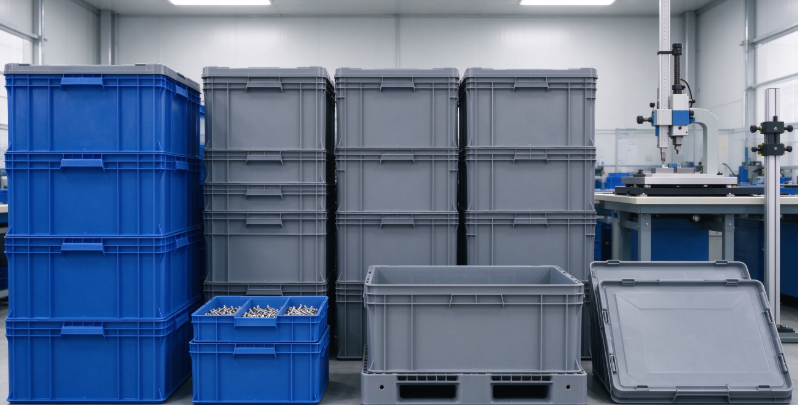
<p><span style="color: rgb(45, 52, 60); font-size: 9.5pt;">An EU standard injection-molded logistics box is useful only when it matches the footprint, conveyor, pallet, rack, and handling process already used at the customer’s site. A model name containing “EU” is not enough to confirm its external dimensions, usable volume, payload, or stack rating. Youngest Plastic Box lists EU standard logistics box models including EU2311, EU4311, EU43148, EU4316, EU4322, EU4611, EU4616, EU4622, EU4633, and EU8622 [1]. This guide explains how to validate the selected box against the actual material-flow system.</span></p><h1><span style="color: rgb(24, 54, 82); font-size: 14pt;"><strong>Start with the system footprint and interface</strong></span></h1><p><span style="color: rgb(45, 52, 60); font-size: 9.5pt;">Map each interface the box must meet: pallet, conveyor, shelving, picking cart, automated storage system, vehicle, and workstation. Measure usable shelf width and depth, conveyor rail spacing, stop positions, and any side guides. State whether the dimension is the outside footprint, internal base, or clear opening. A box can carry the right parts but still jam on a conveyor or overhang a rack if the handling interface is assumed rather than measured.</span></p><p><span style="color: rgb(45, 52, 60); font-size: 9.5pt;">For European distribution, the EPAL Euro pallet has a nominal footprint of 800 × 1,200 mm [2]. That is a pallet dimension, not proof that a specific Youngest EU box nests, stacks, or fits a particular pallet pattern. Ask for the selected model’s controlled external dimensions, internal dimensions, height, stacking rim geometry, and approved pallet loading arrangement. Confirm the real pattern and overhang with a drawing or a physical sample before committing a large fleet.</span></p><h1><span style="color: rgb(24, 54, 82); font-size: 14pt;"><strong>Translate the part or product into usable capacity</strong></span></h1><p><span style="color: rgb(45, 52, 60); font-size: 9.5pt;">Estimate the number and arrangement of parts per box using the part’s maximum envelope, orientation, separator needs, and handling clearance. Include the weight of the payload, dividers, lids, labels, and any insert. Distinguish gross box capacity from the safe working load and stack load; these are different ratings and depend on material, temperature, box condition, stacking height, and support. Request the supplier’s rated figures for the exact model and configuration rather than inferring a load rating from the box’s appearance.</span></p><p><span style="color: rgb(45, 52, 60); font-size: 9.5pt;">Protect fragile, finished, oily, sharp, or sensitive parts with a suitable liner, divider, nest, or insert. Internal features can reduce clear volume, so ask for an internal drawing and sample when the fit is tight. For heavy components, consider how a worker lifts or tips a full box and whether the process needs a lift-assist or smaller batch size. The packaging design should protect both the contents and the employee handling the container.</span></p><h1><span style="color: rgb(24, 54, 82); font-size: 14pt;"><strong>Choose a box style for the material flow</strong></span></h1><p><span style="color: rgb(45, 52, 60); font-size: 9.5pt;">Youngest describes EU standard boxes, dust-proof boxes, HP boxes, EPO folding boxes, turnover boxes, and crates for daily material movement between production, warehouse, and transport [1]. These types support different needs. A rigid container can favor stable handling, a folding model can reduce empty return volume, and a dust-proof cover or enclosure may help protect contents. Confirm whether the chosen style is compatible with automated handling, lids, dividers, labels, and cleaning procedures.</span></p><p><span style="color: rgb(45, 52, 60); font-size: 9.5pt;">If empty containers return on a reverse-logistics loop, compare the empty return volume and labor for folding, nesting, or stacking. Ask the supplier whether the selected model’s walls fold and how many handling cycles are expected under the company’s use conditions. Verify that workers can identify whether the box is fully erected and locked before loading. Do not assume a “folding” label implies a particular folded height or stack density; request the exact model data.</span></p><h1><span style="color: rgb(24, 54, 82); font-size: 14pt;"><strong>Review material, cleanliness, and special environments</strong></span></h1><p><span style="color: rgb(45, 52, 60); font-size: 9.5pt;">Ask what resin is used for the selected model and whether impact resistance, temperature range, UV exposure, chemical contact, food-contact status, or recycled content is relevant. Those attributes are not universal across all logistics boxes. If the box is exposed to washdown or cleaning agents, validate chemical compatibility and drainage. If used in cold rooms or outdoors, test the box at the actual service temperature and consider impact during handling.</span></p><p><span style="color: rgb(45, 52, 60); font-size: 9.5pt;">Youngest’s product listing states that black anti-static configurations may be customized in a resistance range of 10⁶–10⁹ ohms and conductive configurations in 10⁴–10⁶ ohms [1]. These are supplier-published ranges, not independent test certificates or a guarantee for every model. For electronics handling, specify the required ESD control plan and test method, and ask for data for the exact resin, color, and box. A color or “anti-static” label alone is not verification of performance.</span></p><h1><span style="color: rgb(24, 54, 82); font-size: 14pt;"><strong>Confirm samples, load tests, and fleet compatibility</strong></span></h1><p><span style="color: rgb(45, 52, 60); font-size: 9.5pt;">Before fleet purchase, test the chosen model in the real workflow. Check pallet pattern, conveyor transfer, shelf clearance, stack stability, lid or divider fit, label placement, ergonomic handling, and part protection. Run the box through the expected loading and unloading sequence with representative payloads. If automation is involved, confirm dimensional tolerances, base geometry, surface condition, barcode position, and sensor compatibility with the equipment integrator.</span></p><p><span style="color: rgb(45, 52, 60); font-size: 9.5pt;">Request the product drawing, material statement, load and stack data, sample, packaging specification, and agreed inspection points. If boxes from multiple suppliers will mix in one system, verify that they share the same footprint and stacking interface; a nominally similar size may not stack safely. Track sample results and release only the approved model and revision. For reusable fleets, document cleaning, inspection, repair, and retirement criteria based on actual service conditions.</span></p><h1><span style="color: rgb(24, 54, 82); font-size: 14pt;"><strong>Published model range and pallet reference</strong></span></h1><p><span style="color: rgb(45, 52, 60); font-size: 9.5pt;">Model names and optional ESD ranges are stated by Youngest. EPAL dimensions are for the pallet only; no box dimensions or compatibility are implied.</span></p><table style="min-width: 75px;"><colgroup><col style="min-width: 25px;"><col style="min-width: 25px;"><col style="min-width: 25px;"></colgroup><tbody><tr><td colspan="1" rowspan="1"><p><span style="color: rgb(255, 255, 255); font-size: 8pt;"><strong>Reference</strong></span></p></td><td colspan="1" rowspan="1"><p><span style="color: rgb(255, 255, 255); font-size: 8pt;"><strong>Published data</strong></span></p></td><td colspan="1" rowspan="1"><p><span style="color: rgb(255, 255, 255); font-size: 8pt;"><strong>Buyer interpretation</strong></span></p></td></tr><tr><td colspan="1" rowspan="1"><p><span style="color: rgb(45, 52, 60); font-size: 8pt;">EU standard box models</span></p></td><td colspan="1" rowspan="1"><p><span style="color: rgb(45, 52, 60); font-size: 8pt;">10 names listed: EU2311, EU4311, EU43148, EU4316, EU4322, EU4611, EU4616, EU4622, EU4633, EU8622</span></p></td><td colspan="1" rowspan="1"><p><span style="color: rgb(45, 52, 60); font-size: 8pt;">Request dimensional drawings for the exact SKU.</span></p></td></tr><tr><td colspan="1" rowspan="1"><p><span style="color: rgb(45, 52, 60); font-size: 8pt;">EPAL Euro pallet footprint</span></p></td><td colspan="1" rowspan="1"><p><span style="color: rgb(45, 52, 60); font-size: 8pt;">800 × 1,200 mm</span></p></td><td colspan="1" rowspan="1"><p><span style="color: rgb(45, 52, 60); font-size: 8pt;">Pallet interface reference; confirm actual box loading pattern.</span></p></td></tr><tr><td colspan="1" rowspan="1"><p><span style="color: rgb(45, 52, 60); font-size: 8pt;">Anti-static option</span></p></td><td colspan="1" rowspan="1"><p><span style="color: rgb(45, 52, 60); font-size: 8pt;">Supplier lists 10⁶–10⁹ Ω</span></p></td><td colspan="1" rowspan="1"><p><span style="color: rgb(45, 52, 60); font-size: 8pt;">Verify model, method, and test report for intended use.</span></p></td></tr><tr><td colspan="1" rowspan="1"><p><span style="color: rgb(45, 52, 60); font-size: 8pt;">Conductive option</span></p></td><td colspan="1" rowspan="1"><p><span style="color: rgb(45, 52, 60); font-size: 8pt;">Supplier lists 10⁴–10⁶ Ω</span></p></td><td colspan="1" rowspan="1"><p><span style="color: rgb(45, 52, 60); font-size: 8pt;">Confirm exact specification and compliance evidence.</span></p></td></tr><tr><td colspan="1" rowspan="1"><p><span style="color: rgb(45, 52, 60); font-size: 8pt;">Other logistics product families</span></p></td><td colspan="1" rowspan="1"><p><span style="color: rgb(45, 52, 60); font-size: 8pt;">6 categories shown on site</span></p></td><td colspan="1" rowspan="1"><p><span style="color: rgb(45, 52, 60); font-size: 8pt;">Compare box, pallet, bins, lids/dividers, storage and custom solutions.</span></p></td></tr></tbody></table><h1><span style="color: rgb(24, 54, 82); font-size: 14pt;"><strong>Questions to include in the RFQ</strong></span></h1><p><span style="color: rgb(45, 52, 60); font-size: 9.5pt;">List the application, part dimensions, payload weight, target quantity, storage and transport conditions, pallet or conveyor interface, lid/divider requirements, color, labeling, cleaning, ESD or regulatory needs, and expected return loop. Ask for external and internal dimensions, nesting or folding data, material, load/stack rating, operating temperature, sample availability, tooling or customization options, MOQ, lead time, and packaging. These project data should be confirmed on the quote because they are not published for every model on the catalog page.</span></p><h1><span style="color: rgb(24, 54, 82); font-size: 14pt;"><strong>Frequently Asked Questions</strong></span></h1><p><span style="color: rgb(24, 54, 82); font-size: 9.5pt;"><strong>Does an EU model code tell me the box dimensions?</strong></span></p><p><span style="color: rgb(45, 52, 60); font-size: 9.5pt;">No. Ask Youngest for the dimensioned drawing and exact external and internal measurements for the selected model.</span></p><p><span style="color: rgb(24, 54, 82); font-size: 9.5pt;"><strong>Does an 800 × 1,200 mm pallet mean the box fits it?</strong></span></p><p><span style="color: rgb(45, 52, 60); font-size: 9.5pt;">No. It is the EPAL Euro pallet footprint. Confirm box pattern, overhang, stack stability and handling with a layout drawing or trial.</span></p><p><span style="color: rgb(24, 54, 82); font-size: 9.5pt;"><strong>Can the supplier’s ESD ranges be assumed for every color and model?</strong></span></p><p><span style="color: rgb(45, 52, 60); font-size: 9.5pt;">No. Confirm the exact model, material, resistance test method, and report for the intended configuration.</span></p><h1><span style="color: rgb(24, 54, 82); font-size: 14pt;"><strong>Conclusion</strong></span></h1><p><span style="color: rgb(45, 52, 60); font-size: 9.5pt;">Select an EU standard logistics box by validating its actual dimensions and load data against the warehouse, pallet, conveyor, and part-protection needs. Youngest’s catalog lists multiple EU models and logistics-box types, while exact specifications need to be confirmed for the chosen SKU. Test a sample in the real flow before standardizing a reusable fleet.</span></p><h1></h1><p></p>